Oil and Stone vs Asphalt Driveway in Long Island is an important comparison for homeowners choosing between a natural stone finish and a smooth blacktop surface. Both options can create a durable and attractive driveway, but the right choice depends on your property, budget, drainage needs, maintenance expectations, and curb appeal goals.
For many Long Island homeowners, an oil and stone driveway is ideal for a rustic, textured, and cost-effective look. An asphalt driveway may be better if you want a smooth, traditional surface for parking, biking, basketball, or easier snow removal.
At Courtyard Stone Paving, homeowners in East Setauket, Suffolk County, and nearby Long Island areas can get expert guidance on choosing the best driveway material for their property.
Which Driveway Is Better?
An oil and stone driveway is often better if you want a natural-looking, textured, affordable, and decorative surface. It works especially well for long driveways, private roads, rural lanes, and homes where curb appeal matters.
An asphalt driveway is better if you prefer a smooth blacktop surface that is easier to plow and more suitable for bikes, basketball, scooters, or heavy daily use.
The best option depends on your driveway size, slope, drainage, surface condition, budget, and preferred appearance.
What Is an Oil and Stone Driveway?
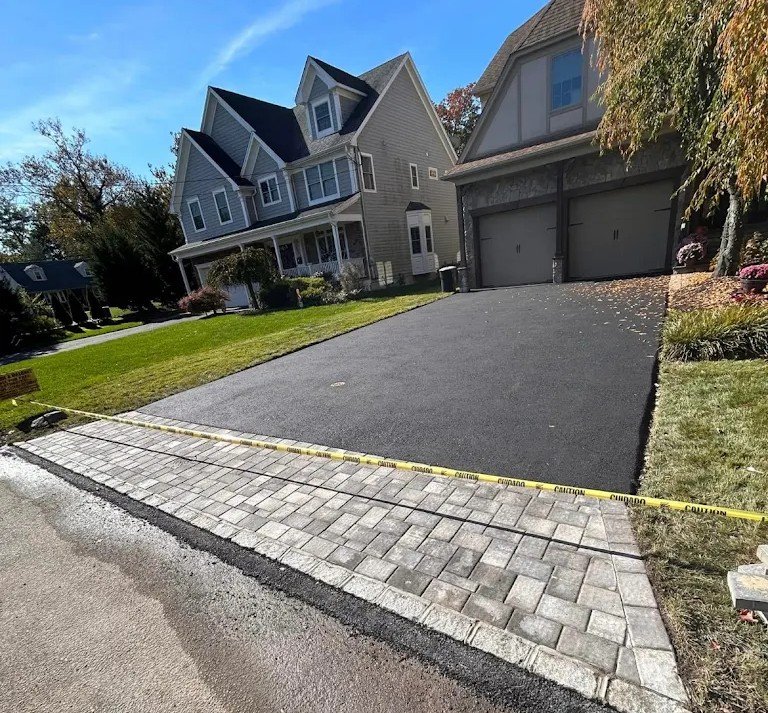
An oil and stone driveway, also called a tar and chip driveway or chip seal driveway, is made by applying hot liquid asphalt and covering it with gravel or decorative stone. The stone is rolled into the surface, creating a textured and natural-looking finish.
This type of paving is popular for long driveways, private roads, estate entrances, rural properties, and homes that need a more decorative finish than standard blacktop. Unlike plain asphalt, oil and stone paving in Long Island blends well with landscaping, stone walls, paver borders, and traditional home exteriors.
Courtyard Stone Paving specializes in oil and stone driveways, tar and chip overlays, chip sealing, private road surfacing, resurfacing, repairs, dust control, and multi-layer applications.
What Is an Asphalt Driveway?
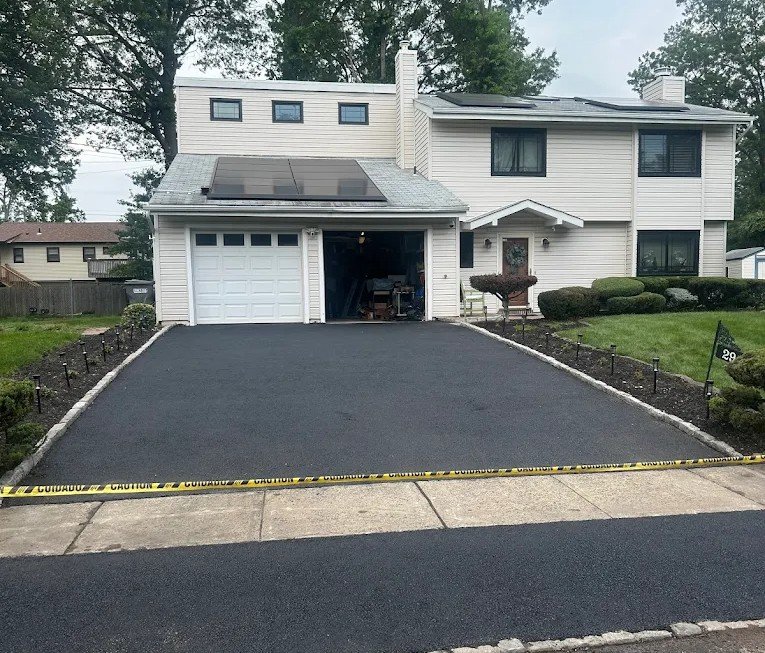
An asphalt driveway is a smooth blacktop surface made from aggregate and asphalt binder. It is one of the most common driveway materials because it gives properties a clean, uniform, and traditional appearance.
Many homeowners choose an asphalt driveway in Long Island because it provides a smooth surface for parking, walking, biking, and snow removal. However, asphalt may show cracks, fading, potholes, or drainage problems over time if it is not properly installed or maintained.
That is why base preparation, grading, and drainage are important for any driveway paving in Long Island project.
Oil and Stone vs Asphalt Driveway in Long Island: Key Differences
When comparing oil and stone vs asphalt driveway in Long Island, the main differences are appearance, cost, traction, maintenance, and daily use.
| Feature | Oil and Stone Driveway | Asphalt Driveway |
| Appearance | Rustic, natural, textured | Smooth, black, traditional |
| Best For | Long driveways, private roads, estate homes | Standard residential driveways |
| Curb Appeal | Decorative and natural | Clean and uniform |
| Maintenance | Occasional stone refresh may be needed | Crack filling and sealcoating may be needed |
| Traction | Strong textured grip | Smooth surface |
| Cost | Often more budget-friendly | Can be higher depending on prep work |
| Snow Removal | Requires careful plowing | Easier to plow |
An oil and stone driveway is often chosen for its natural character and affordability. An asphalt driveway is often selected for its smooth finish and traditional blacktop look.
Which Driveway Material Handles Long Island Weather Better?
Long Island driveways deal with rain, moisture, winter freeze-thaw cycles, coastal conditions, and daily vehicle traffic. Because of this, installation quality is just as important as the material itself.
For both oil and stone driveway in Long Island projects and asphalt driveway in Long Island projects, the base must be properly prepared. Without strong excavation, grading, drainage, and compaction, a driveway can crack, sink, loosen, or collect standing water.
Courtyard Stone Paving focuses on proper base preparation, including excavation, grading, RCA stone base installation, drainage solutions, and edge restraints to help driveways perform better over time.
Which Option Has Better Curb Appeal?
If curb appeal is your main goal, oil and stone paving in Long Island is often the more decorative choice. Its textured stone surface gives your property a warmer and more custom appearance than standard blacktop.
Oil and stone works especially well with Belgian block edging, paver aprons, natural stone walls, garden borders, long rural driveways, coastal-style homes, estate properties, and traditional Long Island landscaping.
Asphalt is a good choice if you want a clean, simple, and uniform black surface. It looks neat and traditional, but it does not provide the same natural stone character as oil and stone.
Which Driveway Is Easier to Maintain?
An oil and stone driveway is often considered a low maintenance driveway because it does not require the same level of sealing as asphalt. Over time, some loose stone may need to be refreshed, especially in high-traffic areas or on sloped driveways. However, the textured surface can hide minor wear better than smooth blacktop.
An asphalt driveway may need crack repair, patching, and sealcoating over time. Since asphalt has a smooth black surface, fading, cracks, and surface damage can become more noticeable.
When Should You Choose an Oil and Stone Driveway?
Choose an oil and stone driveway in Long Island if you want a driveway that is attractive, durable, textured, and cost-effective.
This option is ideal if you have a long driveway or private road, want a rustic driveway design, prefer a natural stone finish, need better traction, want a budget-friendly driveway material, or want your driveway to blend with landscaping.
When Should You Choose an Asphalt Driveway?
Choose an asphalt driveway in Long Island if you want a smooth and traditional blacktop surface.
This option may be better if you want a clean black driveway, need a smooth surface for biking or basketball, prefer easier snow plowing, do not want loose stone on the surface, or have heavy daily vehicle use.
Asphalt can be practical, but homeowners should consider long-term maintenance, drainage, crack prevention, and resurfacing needs before choosing it.
Cost Factors for Oil and Stone vs Asphalt Driveways
The cost of driveway paving in Long Island depends on several factors, including driveway size, current surface condition, excavation needs, base preparation, drainage issues, stone type, asphalt thickness, edging, slope, property access, and whether the project is resurfacing or full replacement.
In many cases, homeowners choose oil and stone because it can be more cost-effective than asphalt, especially for large areas, long driveways, and private roads. A professional estimate is the best way to compare both options for your property.
FAQs
Is oil and stone the same as tar and chip?
Yes. Oil and stone paving is commonly known as tar and chip paving or chip seal paving. It uses hot liquid asphalt and stone to create a durable, textured surface.
Is oil and stone cheaper than asphalt?
In many cases, yes. Oil and stone is often more affordable than asphalt, especially for long driveways, private roads, and large surface areas.
Which driveway is better for a long driveway?
An oil and stone driveway is often better for long driveways because it offers a natural appearance, strong traction, and a cost-effective surface for larger areas.
Which driveway is better for snow removal?
An asphalt driveway is usually easier to plow because it has a smooth surface. Oil and stone driveways can still work well, but snow removal should be handled carefully.
Final Verdict: Which Driveway Is Better for Your Long Island Property?
The best choice between oil and stone vs asphalt driveway in Long Island depends on your goals. If you want a natural, textured, affordable, and low-maintenance surface, an oil and stone driveway may be the better option. If you want a smooth blacktop surface that is easier to plow and better for driveway activities, asphalt may be a better fit.
For many Long Island homeowners, oil and stone offers the right balance of beauty, durability, traction, and value—especially for long driveways, private roads, and properties where curb appeal matters.
Get Expert Driveway Paving Help in Long Island
Still deciding between an oil and stone driveway and an asphalt driveway? Contact Courtyard Stone Paving for expert driveway paving, oil and stone installation, tar and chip resurfacing, base preparation, drainage solutions, and custom driveway finishes in East Setauket, Suffolk County, and nearby Long Island areas.
Courtyard Stone Paving
- Address: 248 NY-25A, Setauket- East Setauket, NY 11733
- Phone: (631) 778-5016
- Email: courtyardpaving@gmail.com
Call today to request a free estimate and choose the best driveway solution for your Long Island property.